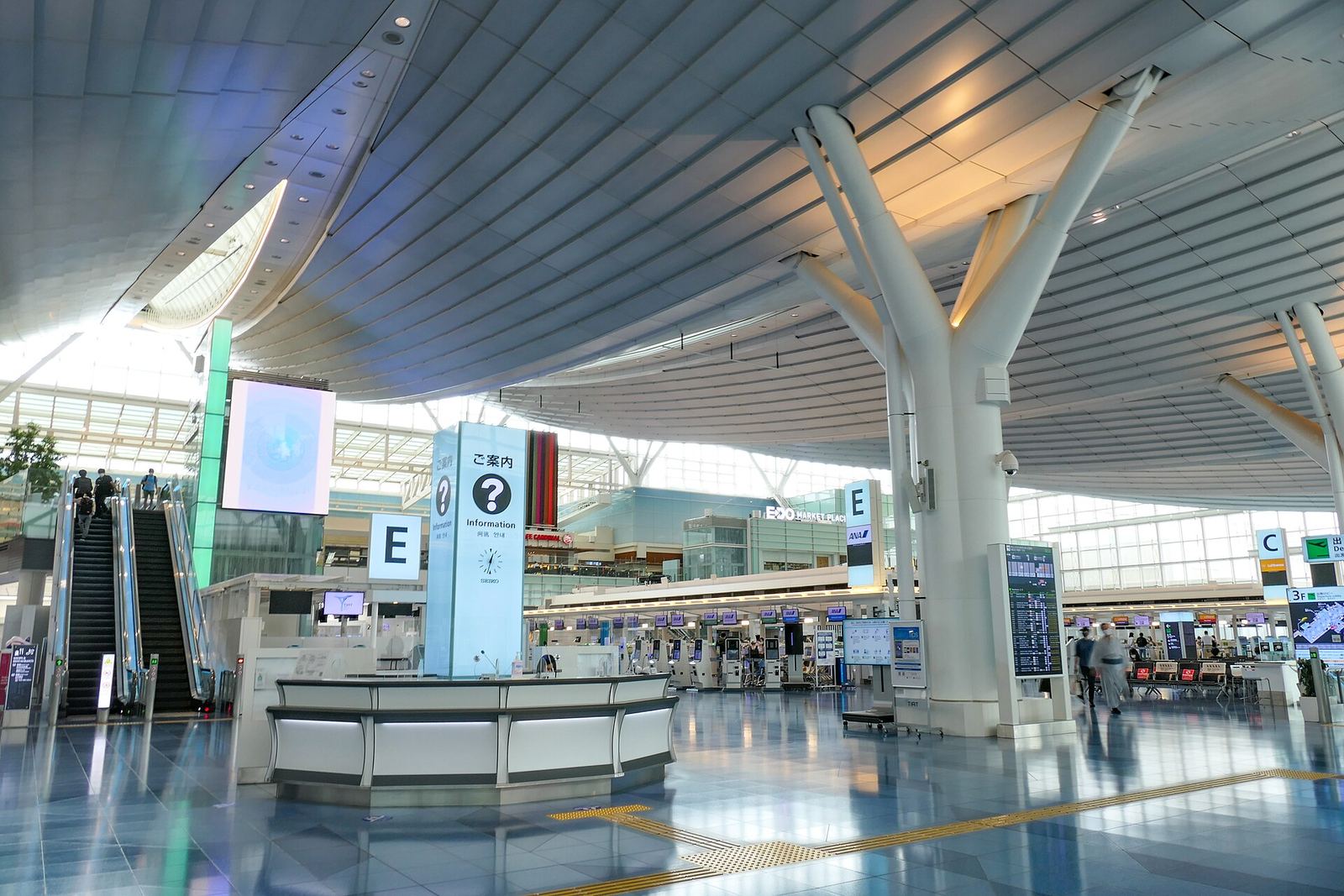
Tokyo layovers: Narita (NRT) and Haneda (HND)
Quick facts
- Airport
- Narita International Airport (NRT); Tokyo International Airport, Haneda (HND)
- Country
- Japan
- Region
- East Asia
| US passport | Airside: YesYes, visa-exempt Stay: 90 days Before you arrive: — (none found) Official source |
|---|---|
| Philippine passport | Visa needed to enter; same-day airside transit OK; transit visas discontinued July 1, 2026 Source: MOFA Japan, Embassy of Japan (Tokyo hub page) |
At a glance
- Two airports. Narita (NRT) has Terminals 1, 2 and 3. Haneda (HND) has Terminals 1 and 2 (domestic, with some international at T2) and Terminal 3 (international). [S3][S8]
- Narita closes overnight. Aircraft only operate 06:00 to midnight, and passengers cannot stay airside outside those hours. Overnight connections at NRT mean clearing immigration and customs, and some passports need a visa for that. [S3]
- Haneda T3 runs around the clock: its card lounges (TIAT Lounge, Sky Lounge, Sky Lounge South) and T3 shower rooms are listed as open 24 hours. [S10][S12]
- Changing between NRT and HND is a full airport change (enter Japan, collect bags, re-check). JAL's own minimum for this is 3 hours (JAL domestic to JAL international) or 3 hours 30 minutes (JAL domestic to another airline's international flight). [S5]
Minimum connection times
| Connection | Published minimum | Source |
|---|---|---|
| NRT international to international | Not found on an official airport or airline page. 90 minutes is widely quoted from the OAG database, but that is a secondary source, so check with your airline. Our guidance (not an official rule): 2 hours, 2.5+ if changing terminals or taking a T3 bus. | — |
| NRT, JAL international to Jetstar Japan codeshare domestic (T2 to T3) | 115 minutes | JAL [S4] |
| NRT, Jetstar Japan codeshare domestic to JAL international (T3 to T2) | 115 minutes | JAL [S4] |
| HND, JAL Group domestic to JAL Group international | At least 1 hour | JAL [S5] |
| HND, JAL Group domestic to another airline's international | At least 2 hours | JAL [S5] |
| HND, JAL Group international to JAL Group domestic | At least 1 hour 20 minutes | JAL [S5] |
| NRT, JAL Group domestic to JAL Group international | At least 1 hour | JAL [S5] |
| NRT, JAL Group domestic to another airline's international | At least 1 hour 50 minutes | JAL [S5] |
| NRT, JAL Group international to JAL Group domestic | At least 1 hour 20 minutes | JAL [S5] |
| HND to NRT (or reverse), JAL domestic to JAL international | At least 3 hours | JAL [S5] |
| HND to NRT (or reverse), JAL domestic to another airline's international | At least 3 hours 30 minutes | JAL [S5] |
| HND international to international | Not found on an official page. Check with your airline. Our guidance: 2 hours; 2.5+ if changing between T2 and T3. | — |
JAL notes that meeting a minimum connection time doesn't guarantee the connection during delays or disruptions. [S5]
Terminals and transfers
Narita (NRT)
- International-to-international transfers stay airside. If your arrival and departure terminals differ, use the airside terminal shuttle bus. [S3]
- Shuttle times published by the airport: T1 to T2 about 8–12 min; T1 to T3 about 12–16 min; T2 to T1 about 12–16 min; T2 to T3 about 4 min; T3 to T1 about 24–28 min; T3 to T2 about 12 min. [S3]
- Shuttle buses to and from Terminal 3 only run at certain times, and some airlines require you to go through immigration instead of using the shuttle. Ask your airline. [S3]
- Terminals vary by airline, so check the airport's flight information page for your date. [S3]
Haneda (HND)
- Same-terminal international transfers: follow the "International Transit" signs. [S8]
- T2 to T3 and T3 to T2 (international to international): take the airside international transit bus; airport guides then walk you to the transit security checkpoint. [S8] The T3-bound connecting bus timetable lists a journey of about 15 minutes. [S9]
- If you must enter Japan instead, you can move between terminals by Keikyu Line, Tokyo Monorail, the free shuttle bus or (T1–T2 only) the underground passageway. Connecting passengers get free transit boarding tickets for the Keikyu Line or Monorail between T1 and T3 and between T2 and T3 at the information counters (T1 B1F, T2 B1F, T3 2F). Bring your passport and boarding pass. [S11]
Transit visas
US passport holders
- No visa needed for transit or for a short visit. The US is on Japan's visa exemption list, with stays of up to 90 days. [S1][S2]
- So a US passport holder can leave either airport on a layover, subject to normal entry checks.
Philippine passport holders
- The Philippines is not on Japan's visa exemption list. [S1]
- Staying airside: Japan's embassies say no visa is needed if you stay in the transit area and connect on the same day without going through immigration. [S2][S6]
- Watch out: the Embassy of Japan in Malaysia's FAQ says you need a visa if you change terminals, change airports, or connect the next day, and it repeats that you can't stay airside at Narita overnight. [S7] Confirm terminal changes with your airline before you book.
- Leaving the airport: you need a Japanese visa. The Consulate-General of Japan in Seattle says transit visas were discontinued: applications stopped on June 30, 2026, and none are issued from July 1, 2026. Apply for a temporary visitor visa instead. [S6a]
- eVISA: Japan's eVISA for Philippine nationals living in the Philippines covers only packaged tours through designated travel agencies. It's single entry, for a 15-day stay. [S13] Check with your airline: we couldn't confirm whether this is the full current scope. Check the MOFA page.
- Shore pass (special landing permission for transit): Japanese law lets the airline apply for up to 3 days' landing in transit. [S14] Check with your airline: we couldn't confirm whether airlines grant this routinely to layover passengers today. Don't plan around it.
Leaving the airport on a layover
- Free transit tours: none found on official Tokyo airport pages; check with your airline.
- Into the city from Narita: the JR Narita Express reaches Tokyo Station in roughly an hour. [S15] Narita is far from central Tokyo, so short layovers there rarely justify going in.
- Into the city from Haneda: Keikyu Line and Tokyo Monorail run from the terminals [S11]. Travel times to central Tokyo weren't checked on an official page, so check with your airline.
Lounges and sleep
Narita (NRT)
- Card lounges after security: IASS Superior Lounge NOA (T1 Central Building 3F) and Superior Lounge KoCoo (T2 Main Building 4F). Executive Lounges 1 and 2 are before security. [S16]
- Day rooms (airside, for departing and transit passengers): T1 Central Building 3F, with showers and single or twin nap rooms, 07:00–21:00. T2 Satellite 3F, 07:00–21:30. Prices: shower ¥1,500 for the first 30 min; single nap room ¥3,000 for the first 60 min; twin ¥5,000 for the first 60 min. [S17]
- Capsule hotel: "nine hours Narita Airport," at Parking P-2 B1F next to T2. Front desk is 24 hours. It is landside, before security, so connecting passengers must clear immigration and customs to use it. [S18][S19]
- Airline lounges: JAL and ANA run their own; check the airline (not detailed here).
Haneda (HND)
- T3 card lounges after security: TIAT Lounge (4F), Sky Lounge (4F), and Sky Lounge South (3F), all listed as open 24 hours. [S10]
- T3 shower rooms: open 24 hours on the 2F Arrival Lobby. Shower ¥1,500 per 30 min; "Refresh Room" with a reclining chair ¥3,000 per 60 min. [S12] The arrival lobby is landside, so you'd have to enter Japan.
- Hotel Villa Fontaine Grand Haneda Airport is directly connected to the international terminal (T3). [S20] It's landside, so you'd need to enter Japan.
Layover ideas by length
Editorial suggestions, not official guidance. Allow for immigration and transit time both ways.
- Under 6 hours: stay airside. At Narita, book a day room. At Haneda T3, use a 24-hour lounge.
- 6–12 hours:
- US passports, Haneda: realistic time in central Tokyo by train.
- US passports, Narita: a trip to central Tokyo is tight (the N'EX alone takes about an hour each way [S15]). A nearer outing around Narita town is easier, but we haven't confirmed that on an official page.
- Philippine passports: stay airside unless you hold a valid Japanese visa.
- Overnight:
- Narita: you must leave the airside area overnight [S3]. US passports can stay at the nine hours capsule hotel or a nearby hotel. Philippine passports need a visa for this, so avoid overnight NRT connections.
- Haneda: 24-hour T3 lounges make an airside overnight possible.
Pitfalls
- Overnight at Narita: no airside waiting from midnight to 06:00 means immigration is mandatory. [S3]
- NRT and HND are separate airports. Separate tickets across the two airports need hours of buffer. JAL itself requires 3+ hours. [S5]
- Changing between Narita and Haneda takes time. From our own trips (first-hand experience, not an official figure): allow at least 3 hours for the inter-airport bus, which is smooth and inexpensive. The train isn't direct, and if a late arrival means you miss the last inter-airport bus, a taxi can cost $200 or more.
- NRT Terminal 3 buses run on a limited schedule. [S3]
- Philippine passports: terminal changes and next-day connections may need a visa, per the Japan embassy in Malaysia. [S7]
- Japanese transit visas no longer exist. Older blog advice to "get a transit visa" is out of date since July 1, 2026. [S6a]
Sources
- [S1] MOFA Japan, Exemption of Visa (Short-Term Stay), updated Sept 1, 2025: https://www.mofa.go.jp/j_info/visit/visa/short/novisa.html
- [S2] Embassy of Japan in the USA, Visa (Transit): https://www.us.emb-japan.go.jp/itpr_en/visa-transit.html
- [S3] Narita Airport, Connection between international flights: https://www.narita-airport.jp/en/airportguide/connect/inter-inter/
- [S4] JAL, Narita Terminal 2 / Transfers: https://www.jal.co.jp/jp/en/inter/airport/nrt/gk/
- [S5] JAL, Connection Information (domestic/international MCTs): https://www.jal.co.jp/content/www/wwwjalcojp/jp/en/dom/boarding/onto/
- [S6] Consulate-General of Japan in Hong Kong, Visa Q&A: https://www.hk.emb-japan.go.jp/itpr_en/visa_Q_A.html
- [S6a] Consulate-General of Japan in Seattle, Visa FAQ (transit visas discontinued): https://www.seattle.us.emb-japan.go.jp/itpr_ja/visa_faq.html
- [S7] Embassy of Japan in Malaysia, Visa FAQ (Q3 transit): https://www.my.emb-japan.go.jp/itpr_en/visainfo_faq.html
- [S8] Haneda Airport, International to International connections: https://tokyo-haneda.com/en/flight/transit/int_int.html
- [S9] Haneda Airport, T3 international connecting bus timetable (PDF): https://tokyo-haneda.com/site_resource/flight/pdf/shuttle_bus_to_terminal3_timetable.pdf
- [S10] Haneda Airport, Card Lounge (T3): https://tokyo-haneda.com/en/service/facilities/lounge.html?tab=terminal3
- [S11] Haneda Airport, Travel Between Terminals: https://www.tokyo-haneda.com/en/access/travel_between_terminals/index.html
- [S12] Haneda Airport, Shower Room: https://tokyo-haneda.com/en/service/facilities/shower_room.html?tab=terminal3
- [S13] MOFA Japan, JAPAN eVISA system: https://www.mofa.go.jp/j_info/visit/visa/visaonline.html
- [S14] Immigration Control and Refugee Recognition Act, Art. 15 (Japanese Law Translation, Ministry of Justice): https://www.japaneselawtranslation.go.jp/en/laws/view/3039/en
- [S15] JR East, N'EX (Narita Express): https://www.jreast.co.jp/en/multi/nex/
- [S16] Narita Airport, Credit card company lounges: https://www.narita-airport.jp/en/service/lounge/credit/
- [S17] Narita Airport, Showers, Nap Rooms: https://www.narita-airport.jp/en/service/transportation/shower/
- [S18] Narita Airport, Capsule Hotel: https://www.narita-airport.jp/en/service/transportation/capsule-hotel/
- [S19] Greenport Agency (operator), Capsule Hotel (Nine Hours), landside note: https://www.gpa-net.co.jp/en/passenger-service/capsule-hotel/
- [S20] Hotel Villa Fontaine Grand Haneda Airport (official): https://www.hvf.jp/eng/hanedaairport-grand/
Routes through this hub
US to Asia
MNLDFW
Manila to Dallas/Fort Worth
Manila to Dallas/Fort Worth: connect in Tokyo, Taipei, Hong Kong, a US gateway or the Gulf?
US to Asia
MNLLAX
Manila to Los Angeles
Manila to Los Angeles: fly nonstop, or connect in Tokyo, Taipei or Hong Kong?
US to Asia
MNLSFO
Manila to San Francisco
Manila to San Francisco: nonstop on PAL or United, or connect in Asia?
US to Asia
DFWTYO
Dallas/Fort Worth to Tokyo
Dallas/Fort Worth to Tokyo: two nonstop airlines to Haneda
US to Asia
DFWHKG
Dallas/Fort Worth to Hong Kong
Dallas/Fort Worth to Hong Kong: Cathay's daily nonstop
Within Asia
MNLTYO
Manila to Tokyo
Manila to Tokyo: flying it nonstop to Haneda or Narita
US to Asia
LAXTYO
Los Angeles to Tokyo
Los Angeles to Tokyo: flying it nonstop to Haneda or Narita
US to Asia
SFOTYO
San Francisco to Tokyo
San Francisco to Tokyo: flying it nonstop to Haneda or Narita
Transit Watch
Rule changes, route deep-dives and layover ideas
Coming soon